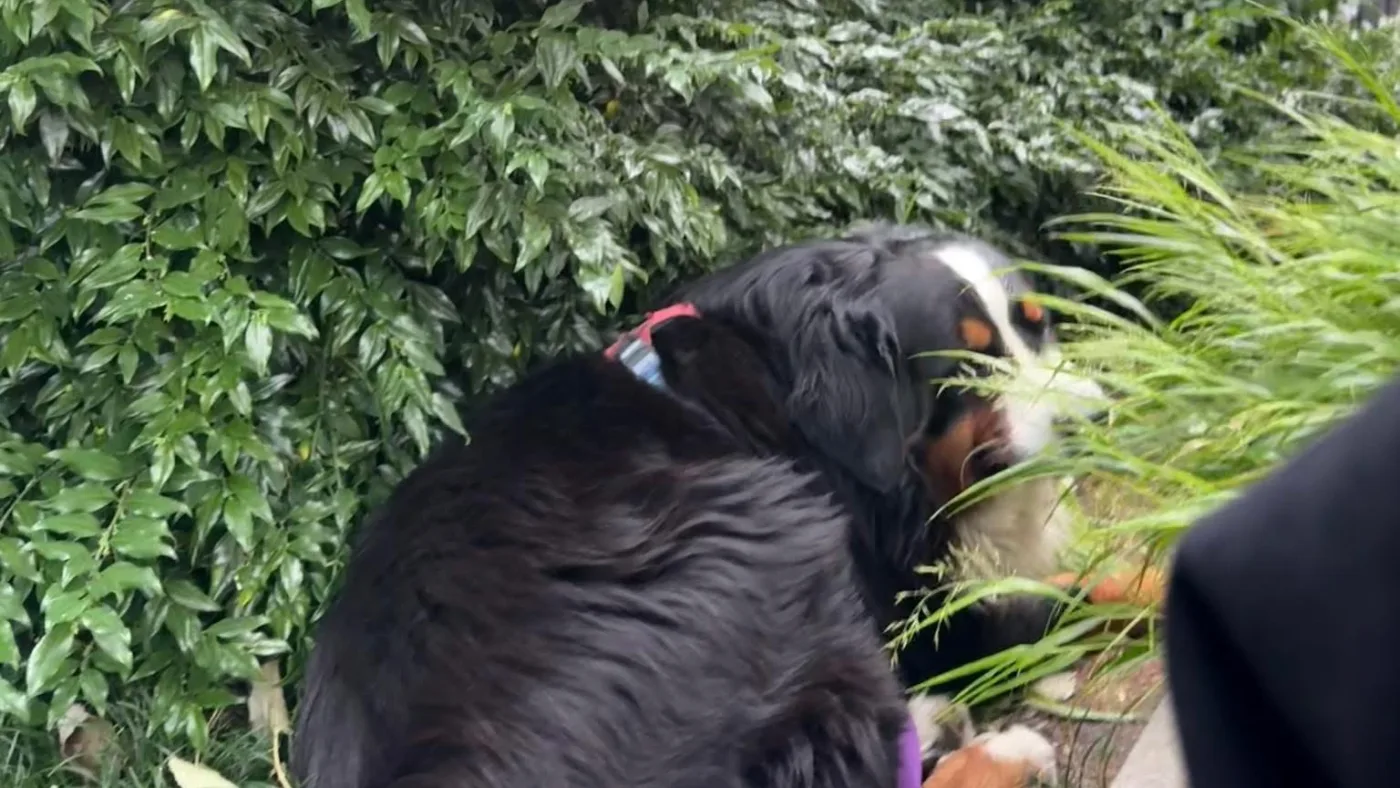
Bernese Mountain Dog grazing. Photo: BunbunYU, CC0, via Wikimedia Commons.
One minute your dog is enjoying a walk. The next, they are grazing like a small cow. It is easy to wonder whether they are hungry, unwell, or about to vomit on the carpet.
The short answer: Most dogs eat grass because it is a common, normal behaviour. They may like the taste or texture, be exploring, or be looking for something to do. Grass eating does not automatically mean your dog has an upset stomach or a nutritional deficiency.
The pattern matters more than the odd mouthful. A sudden change, frantic grazing, repeated vomiting, diarrhoea, pain, lethargy, or weight loss needs veterinary advice.
💡 Key Takeaways
- Occasional grass eating is common and usually harmless.
- Most dogs are not ill before grazing and do not regularly vomit afterward.
- Prevent access to chemically treated lawns, sharp grass seeds, unknown plants, and faeces-contaminated areas.
- Call a vet if grazing becomes sudden or compulsive, or appears with other symptoms.
Why do dogs eat grass?
There is no single proven reason. Research supports the view that plant eating is usually normal canine behaviour, while diet, hunger, boredom, and stomach discomfort may explain individual cases.
It may be a normal inherited behaviour
Dogs are not strict carnivores. Wild canids also consume plant material, and researchers have found grass in wolf scat. This makes it plausible that grazing is an old canid behaviour that domestic dogs retained.
That does not mean every dog eats grass for the same evolutionary reason. It tells us that plant eating is not unusual for the wider dog family.
Some dogs like the taste and texture
Fresh grass is moist, fibrous, and easy to pull. Dogs investigate the world with their noses and mouths, so chewing a few blades can be as ordinary as sniffing a tree or picking up a stick.
Younger dogs tend to eat plants more often than older dogs, which fits with normal exploratory behaviour.
Hunger and routine can affect grazing
Some dogs graze before breakfast or when their stomach has been empty for several hours. A small controlled study found that dogs ate more grass before a meal than after it, suggesting that hunger and time of day can influence the habit.
If your dog only grazes early in the morning and otherwise seems well, try splitting the same daily food allowance into smaller meals. Ask your vet before changing the amount or type of food.
Boredom or anxiety may play a part
Chewing can give an under-stimulated dog something to do. If grazing happens during long, slow periods in the garden, add a sniffing game, short training session, food puzzle, or walk. Our guide to keeping dogs mentally stimulated indoors has more ideas.
Repeated eating of grass, soil, stones, cloth, or other non-food objects deserves more attention. Vets call persistent non-food eating pica, and it can have behavioural or medical causes.
Fibre may help some dogs, but the evidence is limited
Grass contains fibre, but frequent grazing does not prove that a dog’s diet lacks fibre. In the largest published survey of plant-eating dogs, diet type was not linked to how often dogs ate plants.
One published case report described a Miniature Poodle whose seven-year pattern of plant eating and vomiting stopped after a switch to a high-fibre diet. A single case cannot establish a general rule. Speak to a vet or veterinary nutritionist before adding fibre or changing diets.
Do dogs eat grass to make themselves vomit?
Usually, no. This popular explanation gets the order of events wrong for most dogs.
In a 2008 survey of 1,571 plant-eating dogs, 92% rarely appeared ill before eating plants, and 78% rarely vomited afterward. The study concluded that plant eating was generally normal behaviour rather than a reliable sign of illness.
Some dogs do rush outside, gulp grass, and vomit soon afterward. In that situation, stomach discomfort may be driving the grazing. The grass may also irritate the stomach and contribute to vomiting. Watch the whole pattern instead of assuming the grass is a home remedy.
Do not use grass as a stomach treatment
Repeated vomiting can point to reflux, pancreatitis, an intestinal problem, poisoning, or another illness. Contact a vet if your dog vomits more than once, cannot keep water down, retches without producing vomit, has a swollen abdomen, seems painful, or becomes weak.
Can dogs digest grass?
Dogs can digest some carbohydrates, but they do not break down tough plant fibre as efficiently as grazing animals. Chewed grass may be partly digested, while longer blades often pass through the stool.
A blade of grass occasionally hanging from the anus is usually not an emergency. Do not pull it, because it may be attached to other swallowed material and could injure the rectum. Let your dog pass it naturally or ask a vet for help if they strain, cry, bleed, or cannot pass stool.
Is it safe for dogs to eat grass?
Plain, untreated grass is usually safe in small amounts. The lawn around it may not be.
Keep your dog away from:
- Recently treated lawns. Herbicides, pesticides, fertilisers, and slug bait can be harmful. Follow the product’s pet-safety instructions before allowing access.
- Public areas with faeces. Contaminated grass can expose dogs to parasites and infectious organisms.
- Sharp grass seeds and foxtails. Barbed seeds can lodge in paws, ears, eyes, noses, or under the skin.
- Mouldy grass clippings and compost. Fermenting clippings and mould toxins can make dogs seriously ill.
- Unknown plants mixed into the lawn. A dog may swallow a toxic weed or ornamental plant while grabbing grass.
If you think your dog ate a lawn chemical or toxic plant, contact a local emergency vet now. Keep the packaging or take a clear photo of the plant. Do not induce vomiting unless a veterinary professional tells you to.
Which plants are non-toxic to dogs?
The safest way to satisfy a keen grazer is a tray of pet grass, such as wheatgrass or oat grass, grown without pesticides or fertiliser. A few common houseplants also appear on the ASPCA’s non-toxic list for dogs.
| Plant | What to know |
|---|---|
Spider plant (Chlorophytum comosum) |
Non-toxic to dogs, but the dangling leaves invite chewing. Keep it raised if your dog eats enough to upset their stomach. |
Boston fern (Nephrolepis exaltata) |
The true Boston fern is non-toxic. Plants sold as “ferns” are not all related, so check the botanical name. |
Basil (Ocimum basilicum) |
Non-toxic in small amounts. Avoid pesto, sauces, and seasoned preparations that may contain garlic, onion, or too much salt. |
| Wheatgrass or oat grass | Grow a clean tray for your dog and replace it if it develops mould. Confirm that the seed mix contains no toxic plants. |
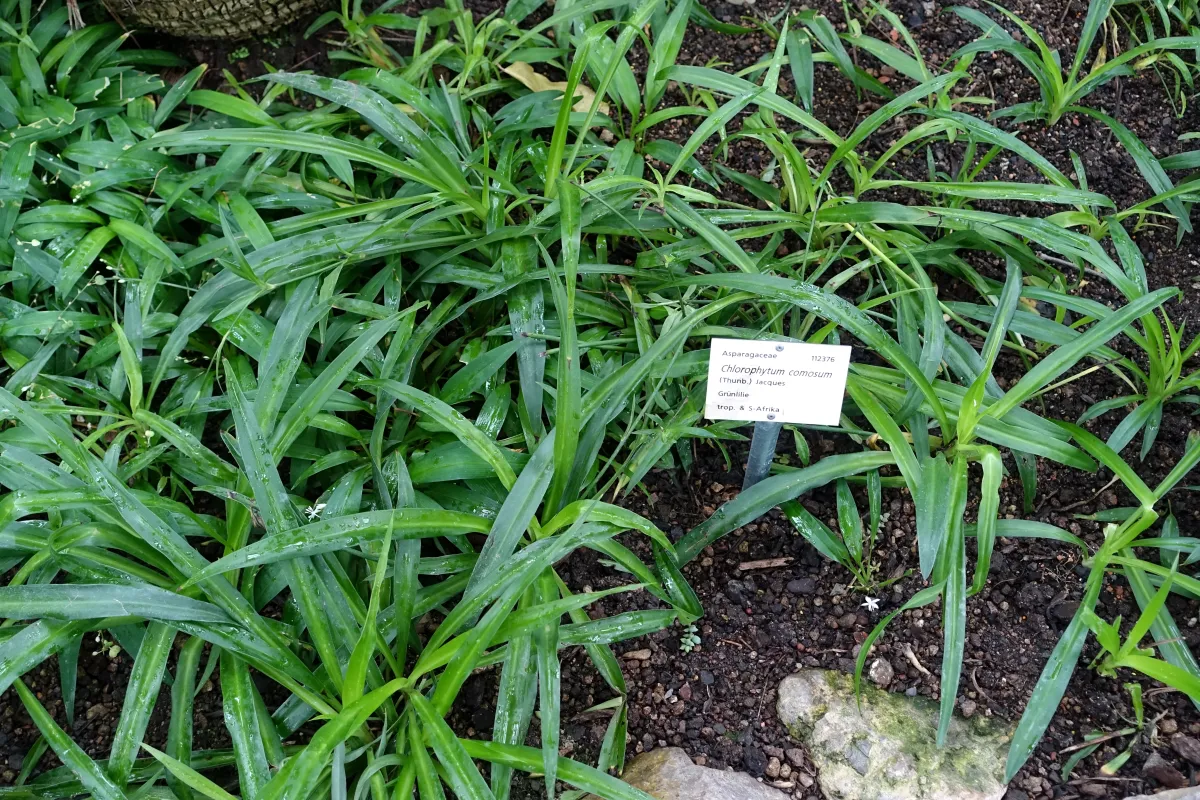
Spider plants are non-toxic to dogs, but eating a large amount can still cause stomach upset. Photo: Daderot, CC0, via Wikimedia Commons.
Non-toxic does not mean edible without limits. Any plant can cause vomiting or diarrhoea if a dog eats enough of it. Soil, fertiliser, pesticides, decorative stones, and the plant pot may create separate risks.
Which plants are toxic to dogs?
Plant names can be confusing, and two plants with similar common names may have very different risks. Check the exact species before bringing a plant home.
| Plant | Why it is risky |
|---|---|
Sago palm (Cycas revoluta) |
Every part is dangerous, especially the seeds. Ingestion can cause liver failure and can be fatal. Treat any exposure as an emergency. |
| Aloe vera | Can cause vomiting, diarrhoea, and lethargy. |
Pothos or devil’s ivy (Epipremnum aureum) |
Insoluble calcium oxalate crystals can cause intense mouth pain, drooling, pawing at the mouth, and vomiting. |
English ivy (Hedera helix) |
Can cause drooling, vomiting, diarrhoea, and abdominal pain. |
| Lilies | Risk varies by species. Some cause digestive irritation in dogs, while true lilies and daylilies are a severe kidney risk for cats. Avoid unidentified lilies in any home with pets. |
The ASPCA toxic and non-toxic plant database can help with identification, but it does not replace urgent veterinary advice after a suspected exposure.
When should grass eating worry you?
Look for a change in the behaviour and symptoms around it. Contact a vet if your dog:
- starts eating grass suddenly, frantically, or much more often than usual
- vomits repeatedly or has persistent diarrhoea
- refuses food or water
- loses weight or shows a swollen or painful abdomen
- seems weak, restless, unusually quiet, or dehydrated
- strains to pass stool or has blood in vomit or stool
- eats large amounts of grass, soil, stones, fabric, or other non-food material
- may have reached a toxic plant, fertiliser, pesticide, herbicide, slug bait, or contaminated compost
Puppies, seniors, and dogs with existing health conditions can become dehydrated faster. Call sooner if they have vomiting or diarrhoea.
If the pattern is new but your dog is otherwise stable, record a short video and note the timing, meals, stool, vomiting, medications, and possible exposures. Those details can make a tele-vet or clinic consultation more useful.
How can you reduce grass eating?
You do not need to stop occasional grazing on a known, untreated patch. If the habit is excessive or unsafe, focus on the reason and the environment.
- Feed a complete and balanced diet suited to your dog’s age and health.
- Discuss meal timing or dietary fibre with your vet instead of making abrupt diet changes.
- Add sniff walks, food puzzles, play, and short training sessions if boredom seems likely.
- Teach a reward-based “leave it” cue for unknown plants and treated lawns.
- Carry high-value treats on walks and redirect before your dog starts gulping grass.
- Provide clean pet grass only if your vet agrees it suits your dog.
Punishment can make scavenging hurried or secretive. Calm redirection and management work better.
Frequently asked questions
Why does my dog eat grass in the morning?
An empty stomach, routine, or access during the first walk may explain morning grazing. If your dog seems well, ask your vet whether dividing the same daily food into smaller meals is appropriate. Morning grazing with repeated vomiting, pain, poor appetite, or weight loss needs a vet assessment.
Why does my dog eat grass and then vomit?
Grass can irritate the stomach, but stomach discomfort may also cause urgent grazing. One isolated episode in a dog who returns to normal may only need close monitoring. Repeated vomiting, unproductive retching, a swollen abdomen, lethargy, or inability to keep water down needs prompt veterinary care.
Should I stop my dog from eating grass?
Stop them if the grass may contain chemicals, faeces, sharp seeds, toxic plants, or mouldy clippings. A few bites of known, untreated grass are usually harmless for a healthy dog.
Does eating grass mean my dog needs more fibre?
Not necessarily. One case report suggests that extra dietary fibre may help an individual dog, but larger research did not link diet type with how often dogs ate plants. Ask a vet before changing food or adding fibre supplements.
What to do next
Occasional grazing is usually one of the many odd, normal things dogs do. Watch for a sudden change and judge it alongside your dog’s appetite, energy, stool, and comfort.
If something feels different, Pawgloo™ can help you speak with a veterinary professional from your phone. A tele-vet can review the pattern and tell you whether your dog needs an in-person examination. Read our guide to tele-vet and clinic visits to choose the right option. You can also use PetGPT for general pet care questions, but it should not delay emergency care.