Dinner is on the table. Your dog is beside your chair, watching one piece of roti with the focus of a detective. You tear off a corner. They lean closer. You begin to wonder whether that tiny bite is harmless or the start of a bad habit.
Here is the useful distinction: a dog may be able to eat a food without that food being suitable as a regular meal. Plain roti, rice, curd, dal and cooked egg can be occasional extras for many healthy dogs. The family versions, with ghee, salt, chilli, onion, garlic or rich tadka, are a different matter.
Your dog’s age, size, health and current diet also change the answer. A snack that agrees with one dog may give another dog diarrhoea or itchy skin.
💡 Key Takeaways
- Plain, fully cooked roti and rice are generally safe in small amounts for dogs that tolerate them.
- Many adult dogs digest milk poorly. Plain, unsweetened curd may be easier to tolerate, but not every dog handles dairy.
- Onion and garlic can damage a dog’s red blood cells. Do not serve food cooked with either ingredient.
- Keep all treats and table extras below 10% of your dog’s daily calories.
- A regular home-cooked diet needs a recipe formulated for your dog by a veterinarian or qualified veterinary nutritionist.
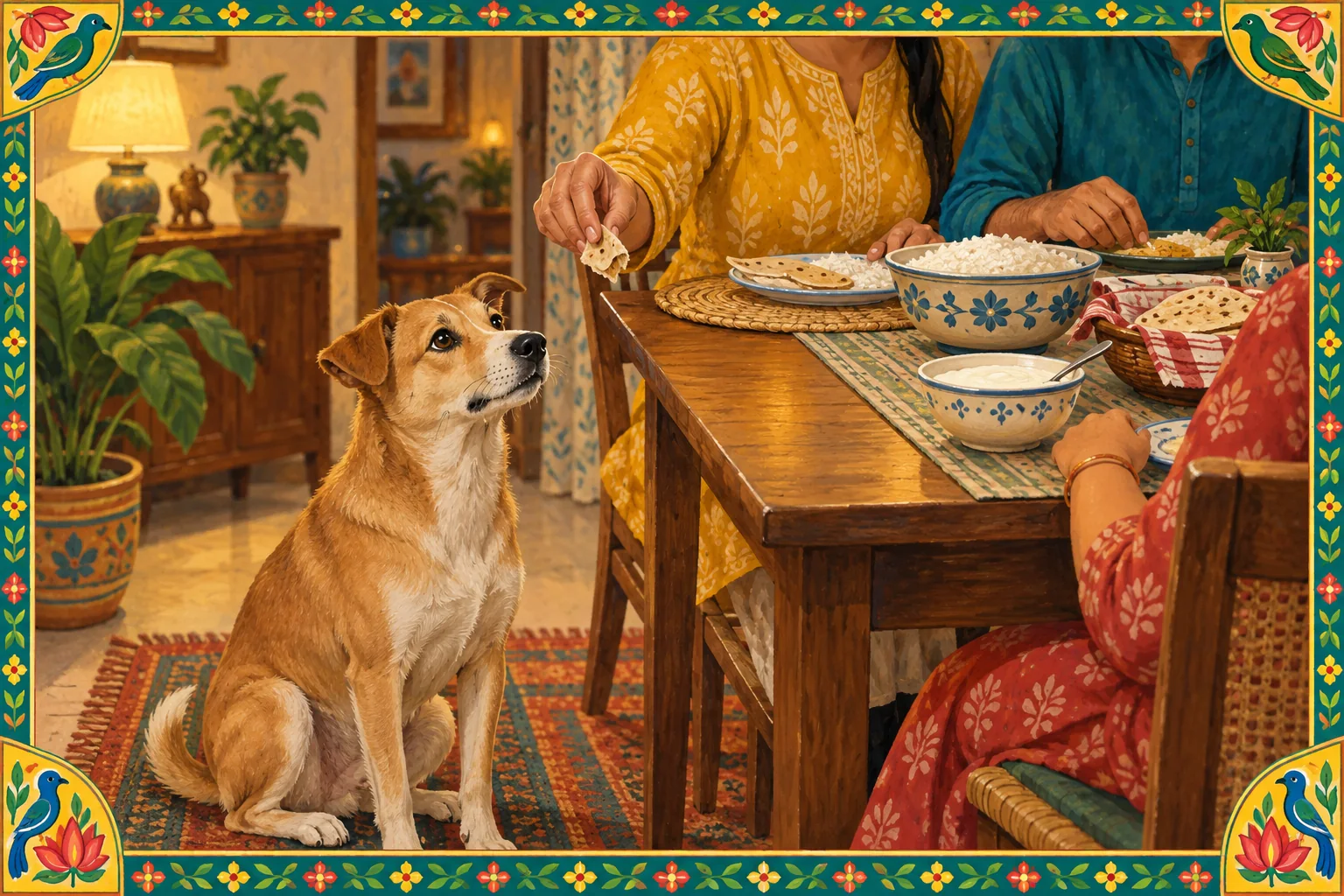
A small bite from dinner and a complete daily diet are two different questions.
The Indian kitchen staple breakdown
Can dogs eat roti?
Yes, most healthy dogs can eat a small piece of plain, fully cooked roti. Wheat is not poisonous to dogs, although a dog with a known wheat allergy or a prescribed grain-free veterinary diet should not have it.
The word “plain” matters. A dry chapati made from atta and water is not the same as a buttery naan, a ghee-coated roti or a stuffed paratha. Rich fats add calories and may upset the stomach. Stuffings and gravies can contain onion, garlic, chilli or too much salt.
Roti is mostly a source of carbohydrate. It does not provide all the amino acids, fats, vitamins and minerals a dog needs across the day. Treat it as an extra, not as the base of the bowl.
Can dogs eat rice?
Plain, well-cooked rice is usually fine in a modest portion. Dogs can digest cooked carbohydrates, and rice appears in many commercial dog foods.
White rice also has a long history in short-term bland meals, but veterinary advice has moved on. A homemade bowl of chicken and rice is not nutritionally complete, and it may not be the best choice for every stomach problem. VCA’s veterinary nutrition guidance recommends asking your vet what “bland” should mean for your dog rather than reaching for one standard recipe.
Serve rice cooked in water without salt, oil, masala or stock. Biryani, pulao and fried rice often contain onion, garlic, fat and seasoning, so they should stay on the family table.
Can dogs drink milk?
Milk is more likely to cause trouble than plain roti or rice. Lactase is the enzyme that digests milk sugar. Lactase activity can fall after weaning, so some adult dogs develop gas, bloating, loose stools or diarrhoea after drinking milk.
The Merck Veterinary Manual notes that lactase activity declines after weaning and advises against dairy when an animal already has diarrhoea.
A dog may love the taste and still digest it poorly. Water should remain their main drink. If milk has caused loose stools before, there is no benefit in testing it again at breakfast.
Can dogs eat curd or dahi?
Some dogs tolerate a spoonful of plain curd better than milk, but curd is not a stomach medicine. Fermentation reduces some lactose. It does not remove all lactose or make dairy suitable for every dog.
Choose plain, unsweetened, unflavoured curd. Check packaged yoghurt for added sugar and sweeteners. Xylitol, sometimes listed as birch sugar, is highly toxic to dogs. Skip curd mixed with salt, boondi, onion, garlic or masala.
Start with a small taste and stop if you see gas, vomiting, loose stools or itching. A veterinary probiotic has a known strain and dose, while household curd does not. Do not use the two as if they are interchangeable.
Is rice and curd a complete meal?
No. Plain rice and curd may suit some dogs as an occasional extra, but that bowl does not supply every required nutrient in the right amount. It can fill the stomach while leaving nutritional gaps.
If your dog eats home-cooked food every day, ask a veterinarian or veterinary nutritionist to formulate the full recipe. The WSAVA nutrition guidelines recommend an individually tailored nutrition plan and give veterinary teams tools to assess the complete diet, including treats and table food.
Can dogs eat dal?
Plain, thoroughly cooked dal may be acceptable in a small amount if your dog tolerates pulses. The dal served to the family often contains the risky part: tadka, chilli, salt, oil, ghee, onion and garlic.
Onion, garlic, leeks and chives belong to the allium family. The ASPCA Animal Poison Control Center warns that alliums can cause digestive irritation and red blood cell damage in dogs. Cooking or drying them does not make them safe.
Do not scoop dal from the family pot and try to pick out the onion afterward. The dish still contains its juices. Set aside a plain portion before seasoning if your vet has said dal is suitable for your dog.
Can dogs eat eggs?
A fully cooked, plain egg can be an occasional protein-rich extra. Boil or cook it through without salt, butter, oil, onion or masala. Skip masala omelette and egg bhurji from your plate.
Egg still adds calories, and some dogs are sensitive to it. Introduce a small amount rather than serving a whole egg to a small dog. If your dog eats a prescription diet, check with the prescribing vet before adding any topper.
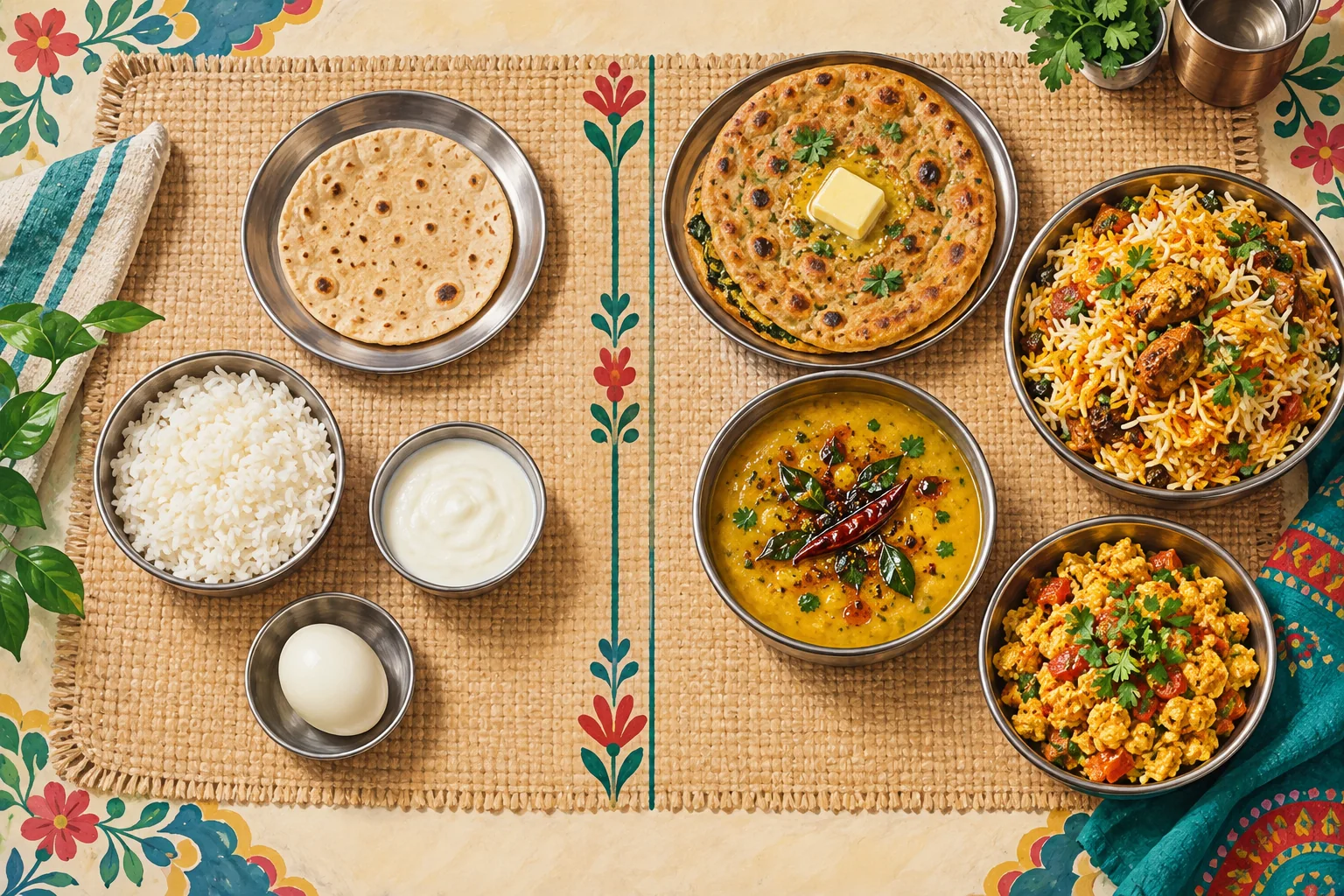
Preparation changes the answer. Plain food may be suitable as a small extra, while rich or seasoned dishes may not be.
Use the three-step Indian kitchen food check
You do not need to memorise every dish. Pause before sharing and run through these checks.
Check every ingredient
Ask what went into the finished dish, not what the dish is called. Rice cooked with onion and garlic is no longer plain rice. Curd sweetened with xylitol is an emergency risk. A roti brushed with ghee adds more fat and calories than a dry piece.
When you did not cook the food yourself, the safest answer is often not to share it.
Count the extras
That bite of roti is not the only treat your dog received today. Count training treats, chews, fruit, toppers and scraps together.
WSAVA advises that treats should provide no more than 10% of a healthy dog’s daily calories. The other 90% should come from a complete and balanced diet. Its dog treat calorie guide shows how small that allowance can be, especially for a small dog.
Decide whether it is an extra or the diet
An occasional spoonful and an everyday bowl have different nutritional stakes. If kitchen food regularly replaces your dog’s normal meal, stop improvising and have the complete recipe reviewed.
“My dog has always eaten it” is not a nutrition test
You may know a dog who has eaten milk and roti for years and seems fine. That history tells you the dog survived the food. It does not show that the diet supplied every essential nutrient or that bloodwork, bones, skin and muscle stayed healthy.
Dogs also differ. One can eat wheat without a problem while another has a food allergy. One can handle a little curd while another gets diarrhoea. Use your dog’s response as evidence about tolerance, but use a properly formulated recipe to judge nutritional completeness.
Avoid changing several ingredients at once when symptoms appear. A simple food diary with amounts, timing, stool, vomiting and itching gives a vet much better information than a week of random substitutions.
Do not use rice and curd as a cure-all
Vomiting and diarrhoea can follow a dietary slip, but they can also point to infection, parasites, pancreatitis, a foreign object or poisoning. Rice and curd cannot diagnose or treat those causes. Dairy may make diarrhoea worse in a lactose-intolerant dog.
Call a veterinarian promptly if your dog has:
- repeated vomiting or cannot keep water down
- blood in vomit or stool
- a swollen or painful abdomen
- marked weakness, collapse or unusual sleepiness
- signs of dehydration, such as tacky gums or sunken eyes
- diarrhoea that persists or keeps returning
- unexplained weight loss, poor appetite, recurring itching or ear problems
- eaten onion, garlic, grapes, raisins, chocolate, xylitol or another known toxin
Puppies, senior dogs and dogs with an existing illness can deteriorate faster. Suspected poisoning, repeated unproductive retching, collapse or a swollen abdomen needs urgent in-person care, not a diet experiment or a routine video call.
The bottom line
Your dog does not need a ban on every food from an Indian kitchen. They need you to separate a plain, occasional bite from the seasoned dish on your plate.
- Plain roti: usually okay as a small extra for a dog that tolerates wheat.
- Plain cooked rice: usually okay in moderation, but not a complete meal.
- Milk: often causes digestive upset in adult dogs.
- Plain curd: tolerated by some dogs in small amounts, but it is not medicine.
- Plain dal and cooked egg: possible extras when properly prepared and individually tolerated.
The everyday diet matters more than any single bite. A full bowl can still be an incomplete bowl.
If food causes recurring digestive or skin problems, use Pawgloo™ tele-vet to discuss the pattern with a veterinary professional. For vomiting, blood in the stool, suspected poisoning or severe weakness, go to an in-person veterinary clinic without delay.